

01
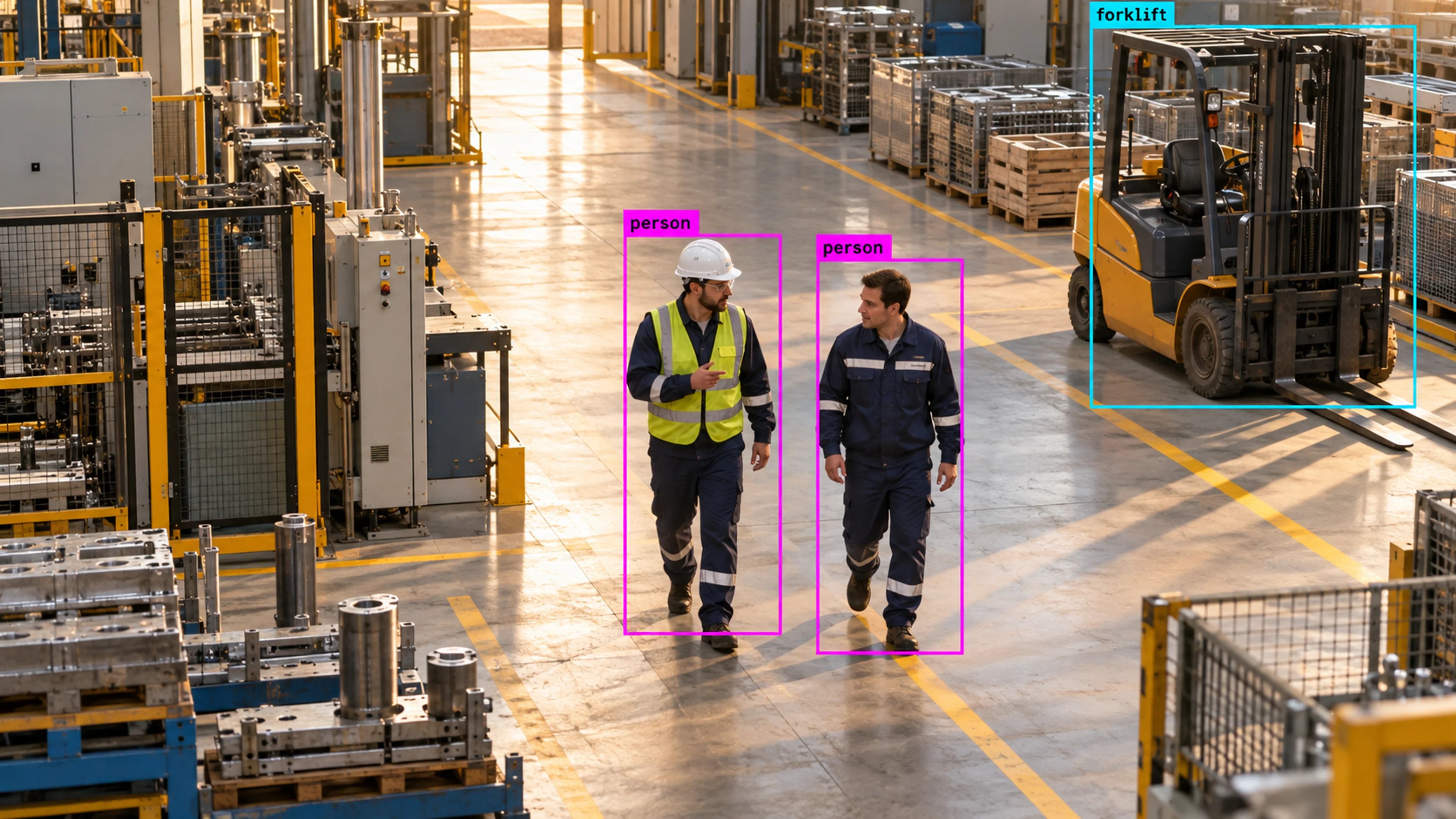
PPE status in a factory zone
Two people enter a zone where helmets are required; one is detected without. A medium-severity alert goes to the supervisor, who addresses it on the floor and closes the incident.
Capability
Monitor PPE, restricted zones, possible fire and smoke events, and worker-equipment proximity.
Safety Monitoring
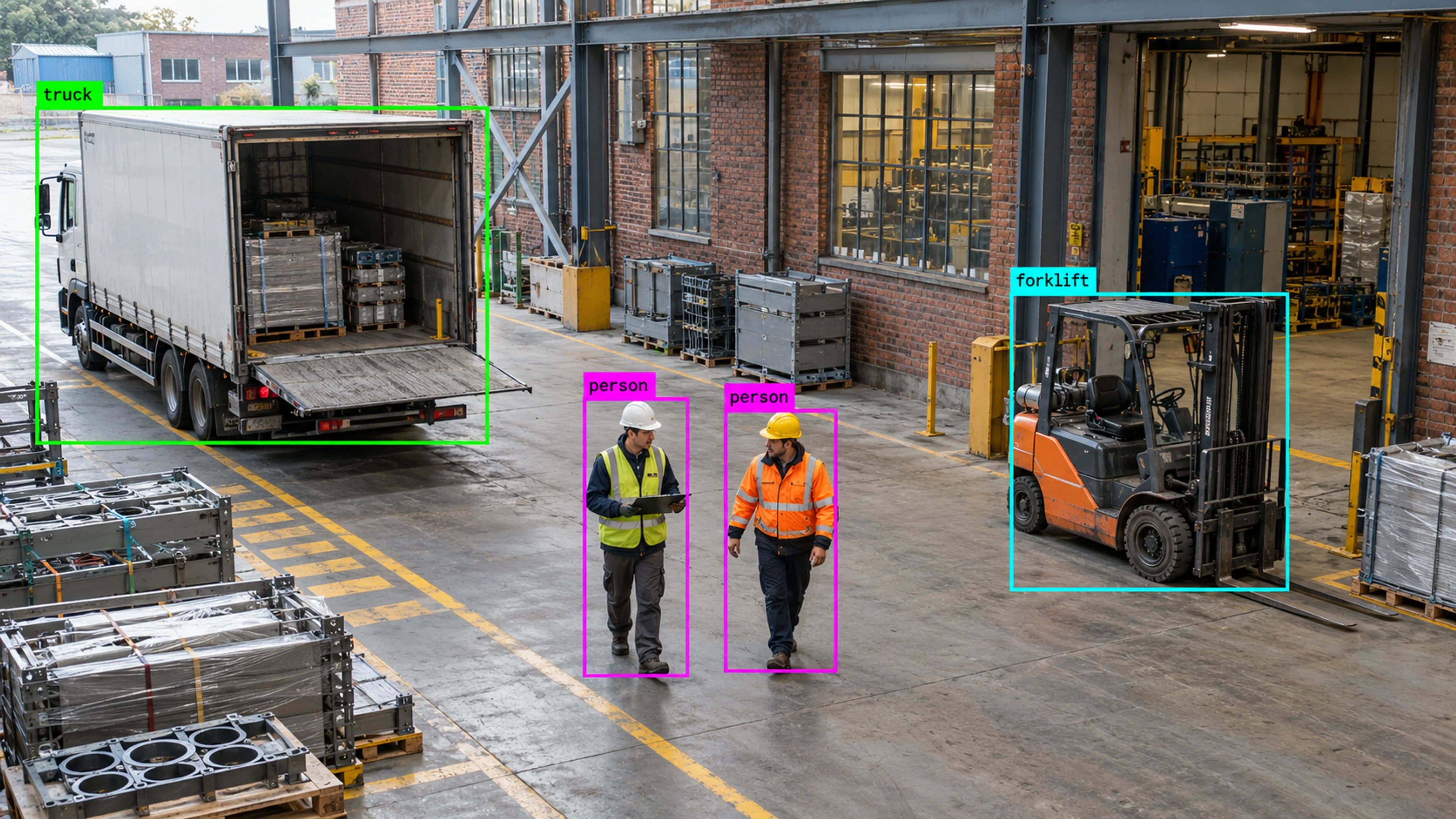
Illustrative environment · Manufacturing
Overview
Safety Monitoring combines detection, zones and tracking into the checks safety teams actually run: is PPE being worn where it is required, is anyone inside an exclusion zone, are vehicles and people getting too close, and is there a visual indicator of fire or smoke.
Every safety alert produces an incident with evidence, so the record of what happened and how it was handled is available for investigations, audits and toolbox talks.
Safety rules only work when someone is watching. Visrax watches the zones and the gear so supervisors can focus on the people.
What it does
Each part is configured around your cameras, zones and schedules — the same system, set up for the way your site runs.
Check for vests, helmets and other visible gear in zones where it is required, with alerts routed to the responsible supervisor.
Flag visual signs of smoke or flame in utility areas, storage and plant rooms as an early warning alongside existing detection systems.
Alert when people and vehicles share a zone or come within a configured distance, especially at crossings and blind corners.
Exclusion zones around machinery, drops and vehicle routes with presence and dwell rules scheduled to the production plan.
In practice
Two people enter a zone where helmets are required; one is detected without. A medium-severity alert goes to the supervisor, who addresses it on the floor and closes the incident.
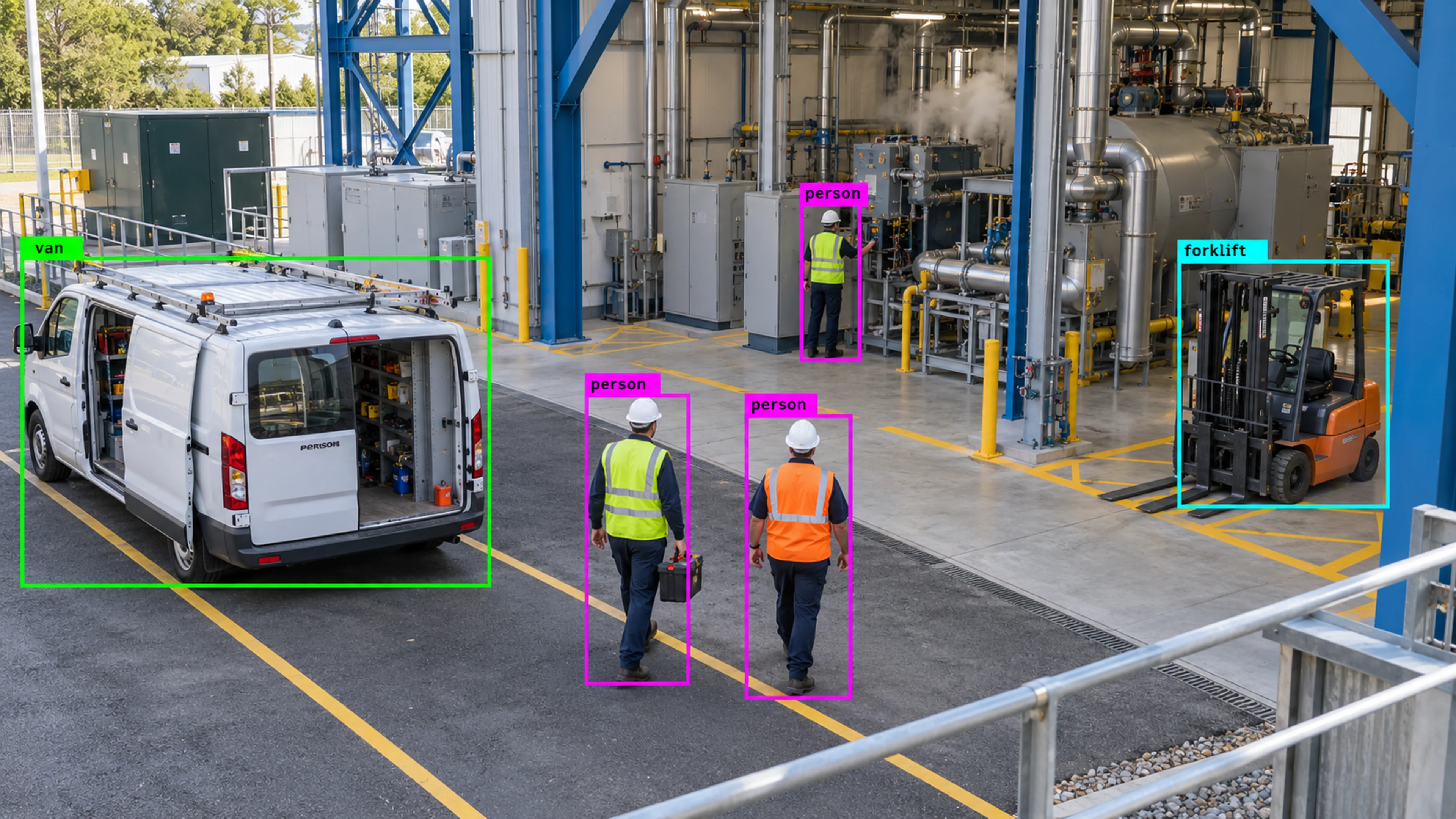
A smoke indicator is raised on a plant room camera. The facilities team is alerted immediately with the frame and clip, while existing fire systems remain the primary control.
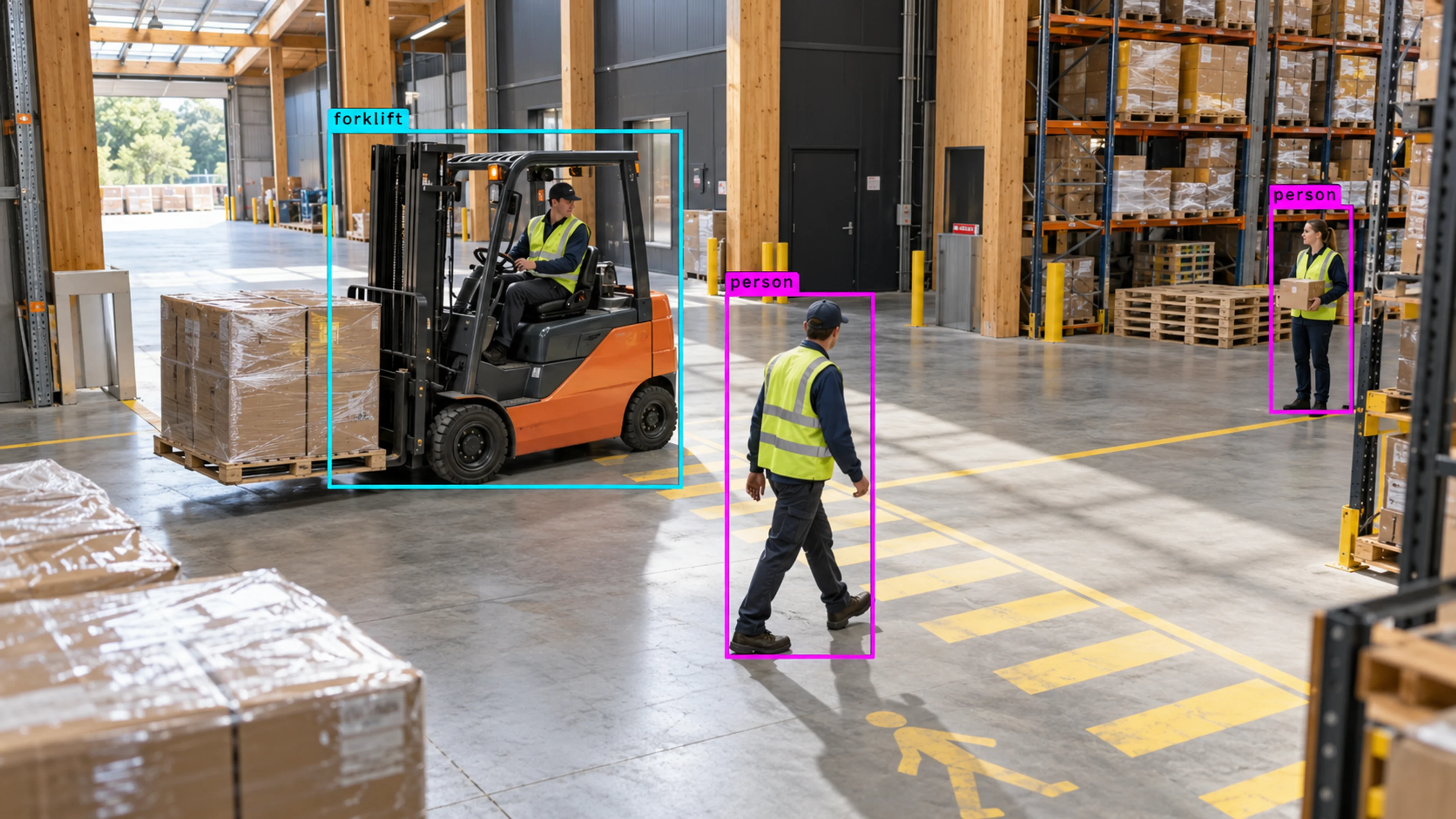
A forklift and a person are tracked into the same crossing zone. The proximity alert is reviewed, and the crossing becomes a candidate for a physical barrier.
Questions
Straight answers about how this is configured, what it needs and what it does not do.
Next step
Tell us about your sites and what you need to catch. We will walk through a setup that fits the way your operation runs.