

Skip to content

Careers

Build visual intelligence for real-world operations.

Visrax works across computer vision, product engineering, design, deployment and enterprise workflows. We are not advertising specific roles right now — if your experience fits one of the areas below, tell us where you would contribute.

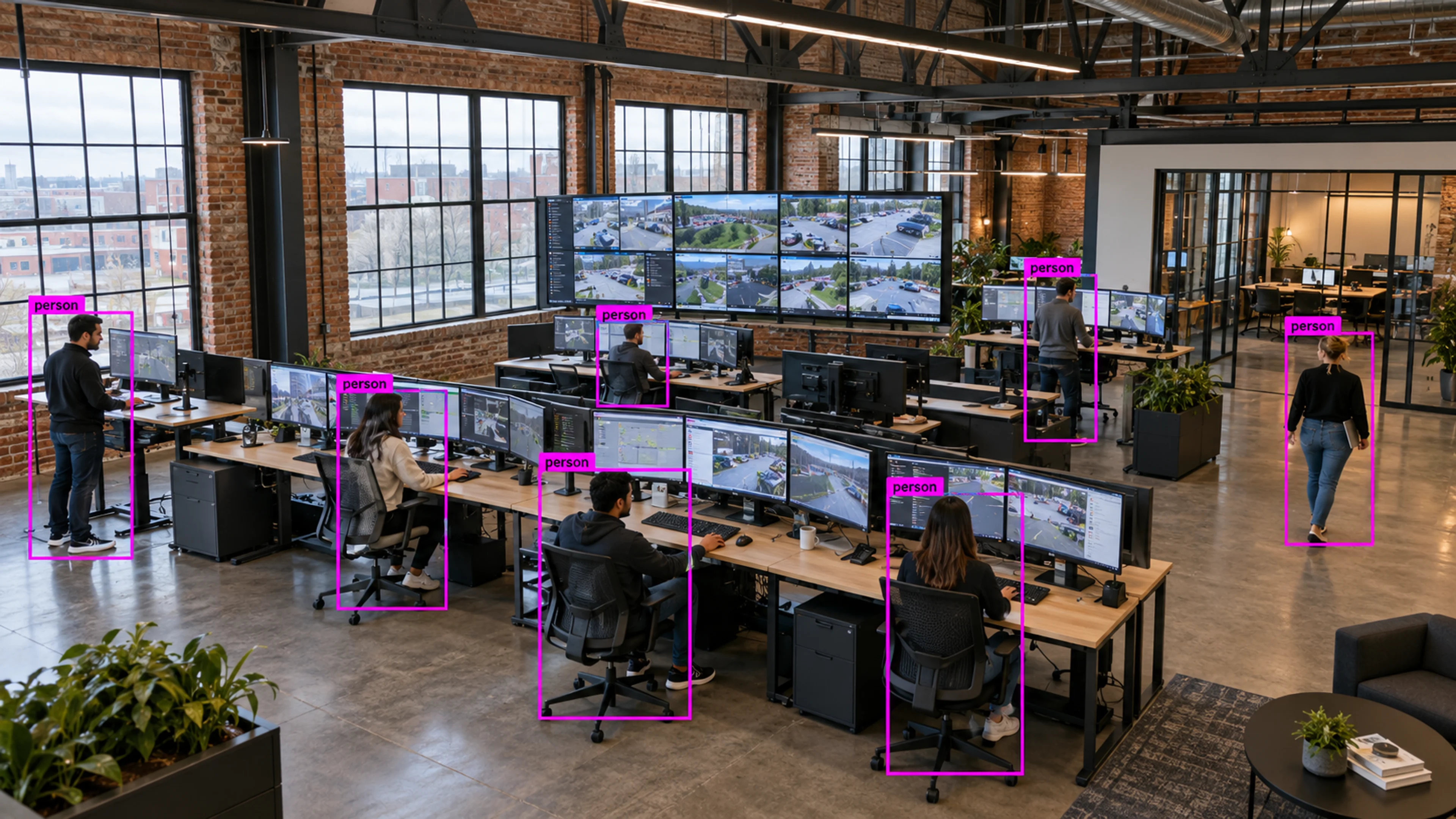
Operations staff reviewing camera views at monitoring workstations. Illustrative object detections.
Illustrative operations workspace

Areas

Where the work is.

01

Computer vision

Detection and tracking that holds up in real sites: mixed lighting, long sight lines, dust, weather and cameras that were never installed for analytics.

  • Model evaluation on customer footage
  • Zone, line and dwell logic
  • On-device and on-premises inference
02

Product engineering

The workspace operators open every shift: live views, alerts with evidence, incident workflow, analytics and a multi-site hierarchy with real permissions.

  • Monitoring and incident UI
  • Event pipelines and storage
  • Reporting, exports and integrations
03

Deployment and customer operations

Walking sites with supervisors, drawing the first zones, proving the rules during a pilot and turning results into a rollout plan.

  • Site walkthroughs and camera review
  • Rule configuration and tuning
  • Pilot reviews and expansion

How we work

What it is like here.

  1. 01

    Ship to a shift, not a demo

    The measure of our work is whether a supervisor trusts an alert at 3 a.m. We design, test and review against that.

  2. 02

    Honest about limits

    We say what the system does and does not do — no inferred identities, no invented accuracy numbers, no claims we cannot show on real footage.

  3. 03

    Small, senior, hands-on

    People here own problems end to end, from the camera stream to the incident record, and spend time on customer sites.

  4. 04

    Evidence over opinion

    Decisions about rules, layouts and priorities are made from footage and incident data, the same way we ask our customers to make them.

Process

Four steps, no surprises.

  1. 01

    Express interest

    Use the contact form with the Careers topic. Tell us the area you fit and link anything you have built.

  2. 02

    Intro conversation

    A short call about the problems we are working on and what you would want to own.

  3. 03

    Working session

    A practical exercise close to real work — footage, a rule set, a UI flow — reviewed together.

  4. 04

    Decision

    Clear feedback either way, usually within a week of the working session.

Questions

Careers questions

01Are there open roles right now?
We are not advertising specific listings at the moment. We hire across the three areas above as the work grows, and we read every expression of interest.
02Is the work remote or on site?
Engineering work is largely remote-friendly. Deployment roles involve regular time on customer sites, which is where the most useful learning happens.
03Do I need computer vision experience for every role?
No. Product engineering and deployment roles need people who understand operations, users and reliability. Curiosity about how detection behaves in the field helps.
04How should I apply?
Use the contact form and choose the Careers topic. Include the area you are interested in and a link to work you are proud of.

Express interest

Tell us where you would fit.

Use the contact form and choose the Careers topic. Include the area you are interested in and a link to something you have built.