

Platform
How existing cameras become an operational intelligence layer
Most sites already own the hardware. What is missing is the layer that turns camera views into events, alerts, evidence and trends a team can act on — here is how that layer is built.
By VisraxPublished 13 Jul 2026Updated 7 Oct 20267 min read
01
The gap between footage and action
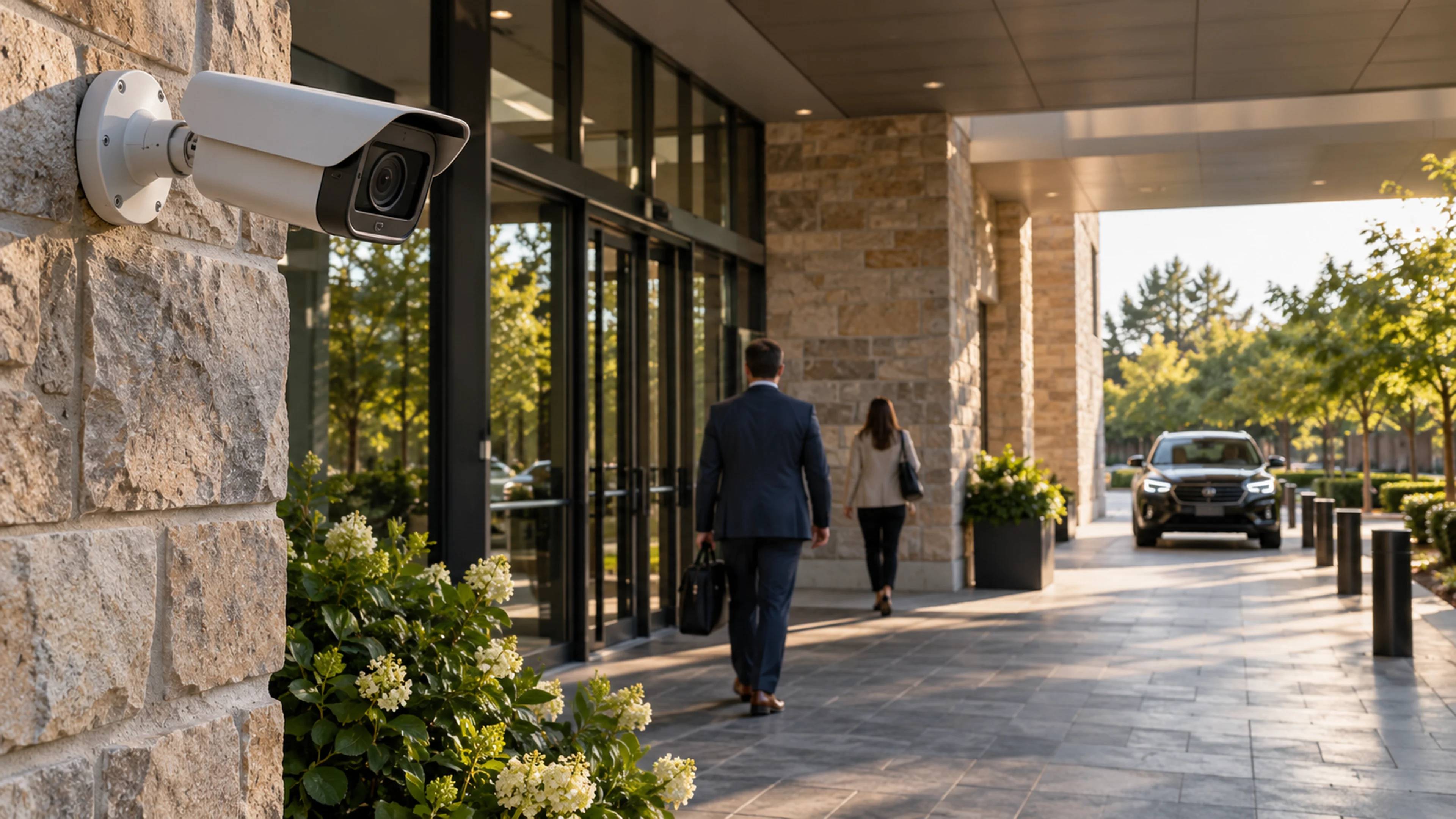
Walk into almost any factory, warehouse, office or campus and you will find cameras already covering the entrances, floors, yards and shared spaces. They record continuously, the footage is retained for a period, and most of it is never watched. When something goes wrong, someone scrolls back through hours of recording to find the thirty seconds that matter.
The hardware is not the problem. The problem is that a camera wall assumes a person is watching, and nobody can watch twenty feeds for eight hours. What is missing is a layer that translates visual activity into structured events — a person entered this zone at this time, a vehicle has been waiting at this gate for four minutes — so that the team’s attention goes where it is needed.
02
From detection to events
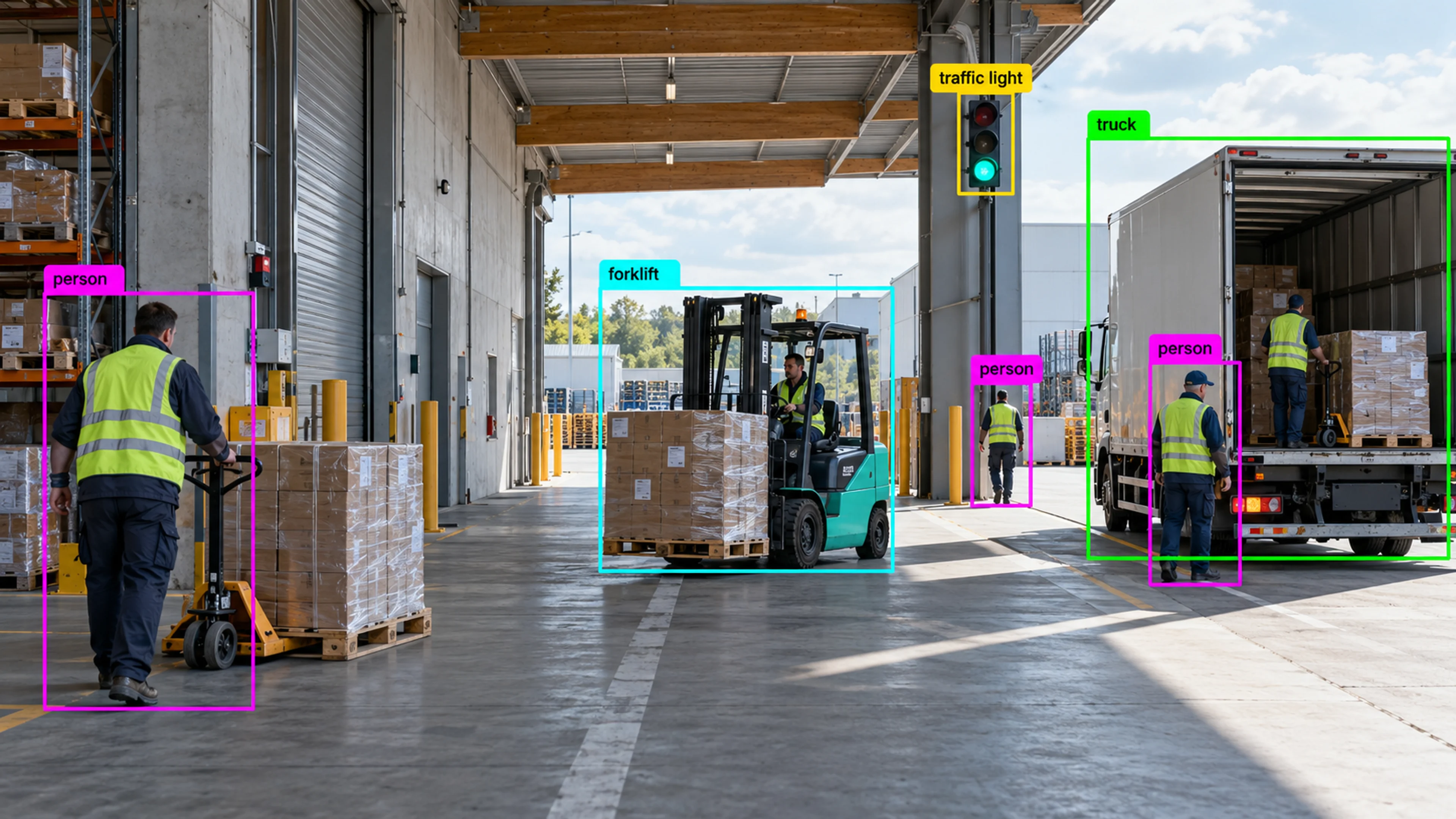
The first step is detection: identifying people, vehicles, equipment and safety gear in each camera view. On its own, detection produces a stream of observations with no priority. A person in a corridor is not news.
Meaning comes from configuration. Zones drawn on the camera view — a machine exclusion area, a loading bay, a restricted room — and schedules that say when each zone should be quiet turn an observation into an event. The same person detection is routine in the corridor and an alert inside the exclusion zone during production. Tracking adds direction and dwell, so events can describe behaviour: entered from the walkway, stayed forty seconds, left through the gate.
- Detection: what is in the view (people, vehicles, equipment, PPE).
- Zones and schedules: where and when it matters.
- Tracking: direction, dwell and movement between zones.
- Rules: the combination that produces an alert with a severity.
03
Why evidence has to be attached at alert time
An alert that says “zone entry, camera 14, 02:13” is only useful if the reviewer can see what happened without searching the archive. The frame that triggered the rule, a short clip around it and the movement path should be stored with the alert the moment it is raised.
This is what turns an alert into a record. When the incident is assigned, commented on and closed, the evidence travels with it. Weeks later, a safety review or an audit can open the incident and see exactly what the supervisor saw, which is far more valuable than a note that says the event was handled.
04
Starting small and proving the alerts
The deployments that work begin with a short list of zones where the risk or the cost is obvious: a forklift crossing, a machine cell, a loading bay, a server room. Rules are configured from existing footage, reviewed with the supervisors who will receive the alerts, and tuned during a pilot until the team trusts them.
Expansion then follows a pattern. Rules proven at one site are applied to similar sites with their own zones; reports compare locations; and the list of monitored situations grows as the organisation sees which alerts change behaviour. The camera estate rarely needs to change at all.
05
What changes for the team
The day-to-day difference is where attention goes. Instead of scanning feeds, the team works from a list of events ranked by severity, each with its evidence. Instead of reconstructing incidents after the fact, they close cases with the record already complete. And instead of guessing about occupancy, queues or congestion, they read the trend.
None of this requires new cameras. It requires a system that treats the cameras as sensors and the team’s time as the scarce resource.