

Strategy
Where safety, security and operations meet in video analytics
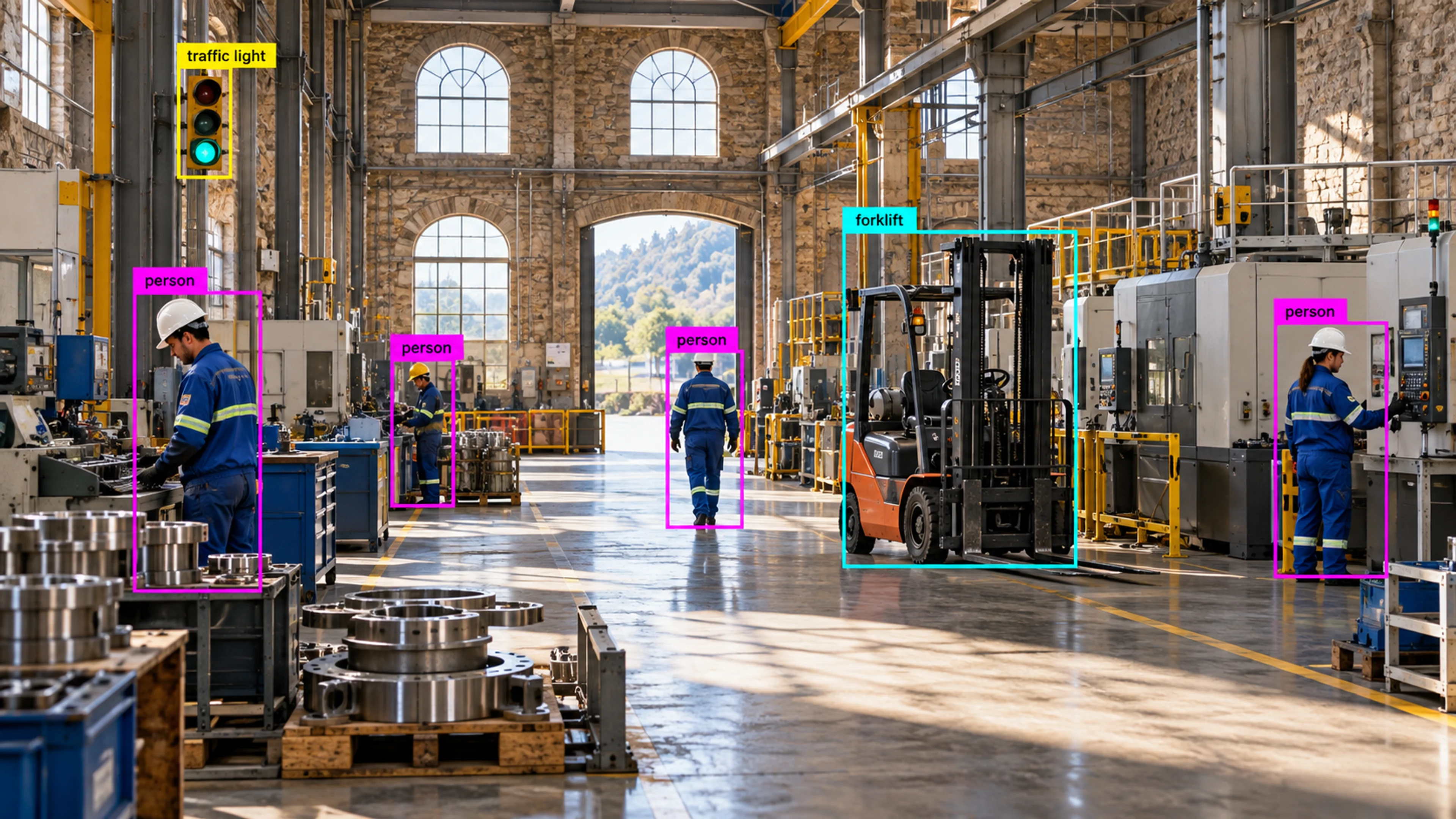
Restricted-area entries, PPE checks, intrusion, occupancy and vehicle movement are usually handled by different teams. A shared event model lets them use the same cameras, the same evidence and the same workflow.
By VisraxPublished 13 Jul 2026Updated 7 Oct 20266 min read
01
Same cameras, three teams
A person entering a fenced equipment area is a safety event during production, a security event at night, and an operations event if it delays a job. The camera is the same. The teams, the urgency and the response are different.
Organisations often respond by giving each team its own tool, each configured on the same feeds. The result is duplicated effort, inconsistent records and three versions of what happened. A shared event model avoids this by treating the detection as a single fact and letting rules decide who should act.
02
A shared event model
In practice this means one set of zones, one schedule and one definition of each object class across the site, with rules layered on top. The exclusion zone around a press has a presence rule routed to the line supervisor during shifts and an after-hours rule routed to security at night. Both rules draw on the same detection and produce incidents in the same workflow.
The benefit is consistency. Evidence, severity, assignment and history look the same whether the incident is a missing helmet or a perimeter approach, which makes reporting across teams possible.
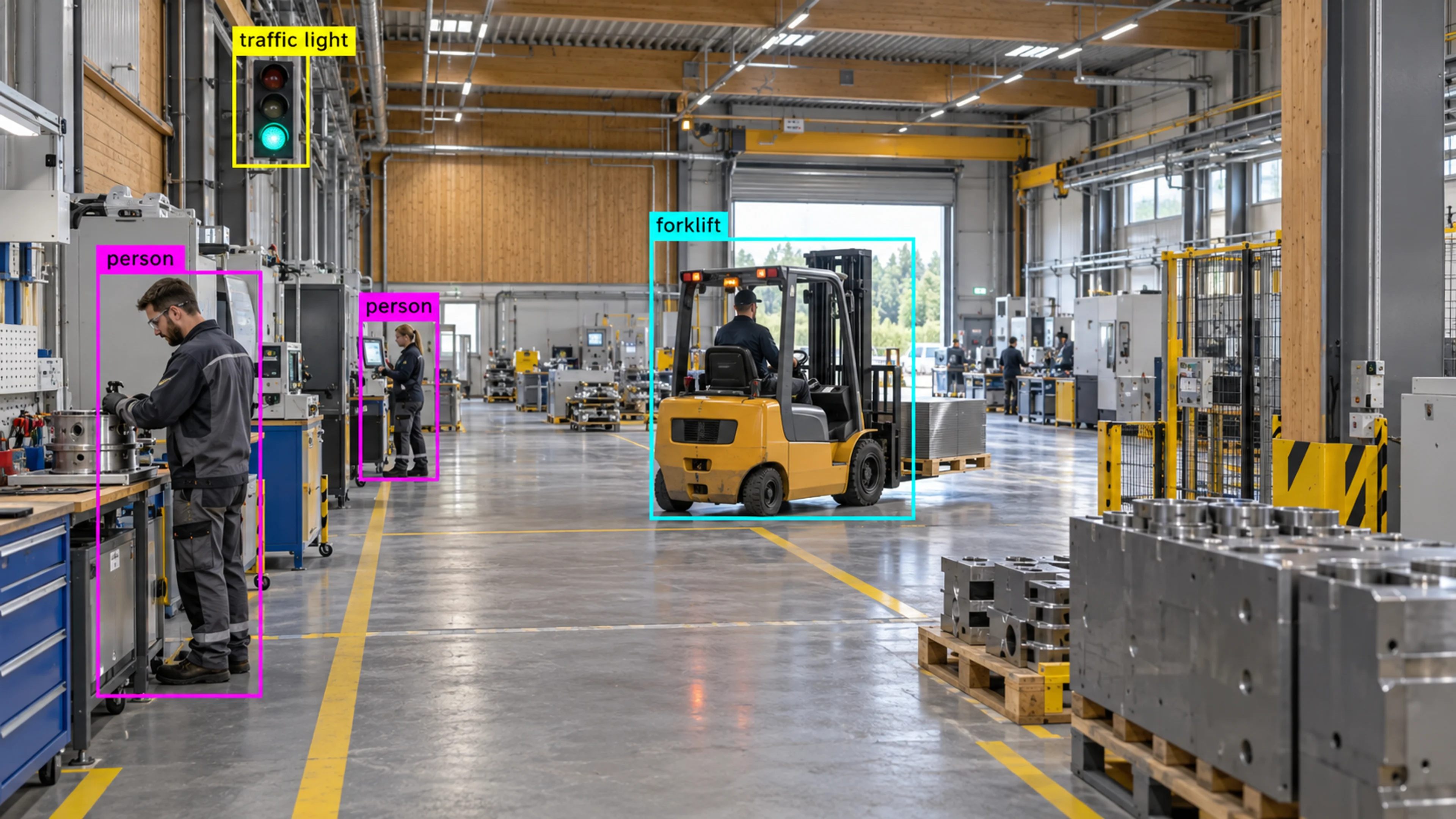
- Safety: PPE presence, exclusion zones, proximity, visual smoke indicators.
- Security: after-hours movement, perimeter zones, restricted rooms, abandoned objects.
- Operations: occupancy, queues, dock and gate throughput, camera availability.
03
Routing decides who acts
Severity and routing are where the three disciplines diverge. A safety rule in a live cell is high severity and goes to the floor immediately. An overnight stockroom detection is medium severity and can wait for the morning manager. A congestion alert at a gate is operational and goes to dispatch.
Because routing is configured per rule and per time window, the same system can serve all three teams without any of them seeing noise from the others.
04
Trends across teams
The most useful output of a shared model is the pattern that no single team would see. Incident counts by zone across safety, security and operations tend to converge on the same few places: a crossing that produces proximity alerts by day and after-hours detections by night, a dock that generates congestion and restricted-entry events.
Those zones become the agenda for layout changes, barriers, schedules and training, and the same reports measure whether the change worked.
05
Keeping the public workflow simple
None of this should be visible to the people receiving alerts. Their experience should stay simple: here is what happened, here is the evidence, here is who owns it. The sophistication belongs in the configuration, where safety, security and operations agree on zones, schedules and routing once and then get on with their jobs.